
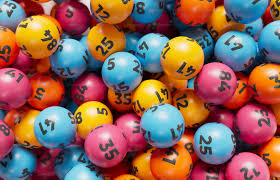
The Role of Probability in Playing the Lottery – Probability plays a central role in understanding how lottery games work. While lotteries are often associated with excitement and large jackpot prizes, they are fundamentally based on mathematical principles that determine how likely different outcomes are. Examining the role of probability helps explain why lottery prizes are structured the way they are and why winning top prizes is rare. This discussion is purely educational and focuses on how probability applies to lottery systems.
What Is Probability in the Lottery?
Probability refers to the likelihood that a specific outcome will occur. In the context of lotteries, it describes the chance that a selected set of numbers will match the numbers drawn. Because lottery numbers are chosen randomly from a defined range, each valid number combination has the same probability of being selected.
For example, if a lottery requires choosing 6 numbers from a pool of 49, the total number of possible combinations is fixed. The probability of selecting the exact winning combination is determined by how many unique combinations can be formed from those numbers.
Probability and Number Combinations
Lottery probability is closely tied to combinations. A combination represents a unique group of numbers, regardless of order. As the range of numbers increases or the number of required selections grows, the total number of combinations increases dramatically. This is why lotteries with larger number pools have much lower odds of winning the jackpot.
This mathematical structure explains why jackpots can grow very large. Because the probability of a single ticket matching all winning numbers is extremely small, it often takes many draws before a jackpot is won.
Probability and Prize Tiers
Most lottery games offer multiple prize tiers, not just a jackpot. These tiers are based on matching some, but not all, of the drawn numbers. The probability of winning smaller prizes is much higher than winning the top prize because fewer matching numbers are required.
For example, matching two or three numbers may have relatively common probabilities compared to matching all numbers. This tiered system allows lotteries to award prizes more frequently while maintaining the rarity of the largest payouts.
Randomness and Independence
A key principle in lottery probability is randomness. Each draw is independent of previous draws, meaning past results do not influence future outcomes. If a particular number has not appeared for a long time, its probability of appearing in the next draw remains the same as any other number.
Understanding this independence helps explain why patterns or trends in previous draws do not change the mathematical odds of future results.
Probability vs. Perception
Human perception often struggles with extremely small probabilities. Large jackpot amounts can make winning feel more attainable than it actually is. Probability provides a factual framework that contrasts emotional expectations with mathematical reality.
This contrast is important for understanding why lotteries emphasize entertainment and chance rather than predictability or control.
Educational Value of Lottery Probability
Studying lottery probability can be useful beyond gaming contexts. It introduces concepts such as combinations, large numbers, and statistical likelihood, which are applicable in many areas of mathematics and real-world analysis. For students and learners, lottery examples are often used to demonstrate how probability works in practice.